
IRC Section 168(k) Tax Strategy
Qualifying Arcade Games for Bonus Depreciation
Bonus Depreciation
Post-OBBBA

IRC Section
Qualified Propert
Business Use Required
Listed Property
MACRS Recovery
Asset Class 79.0


Overview
Turning Play into Tax Strategy
The Internal Revenue Code offers several incentives to encourage business investment, one of the most significant being the additional first-year depreciation deduction, commonly known as bonus depreciation, codified under Section 168(k). This provision allows businesses and individuals to immediately deduct a substantial percentage of the purchase price of qualifying assets rather than capitalizing and depreciating the cost over many years.
Recent legislation, particularly the One Big Beautiful Bill Act (OBBBA) of 2025, has permanently restored 100% bonus depreciation, making it a powerful tool for tax planning. This guide provides a comprehensive analysis of how an arcade game — a seemingly recreational asset — can be strategically utilized within a trade or business to qualify for this valuable tax deduction.
The Qualifying Asset
Commercial-Grade Arcade Games in Action
Real arcade machines deployed in a business environment — qualifying tangible personal property under MACRS Asset Class 79.0.
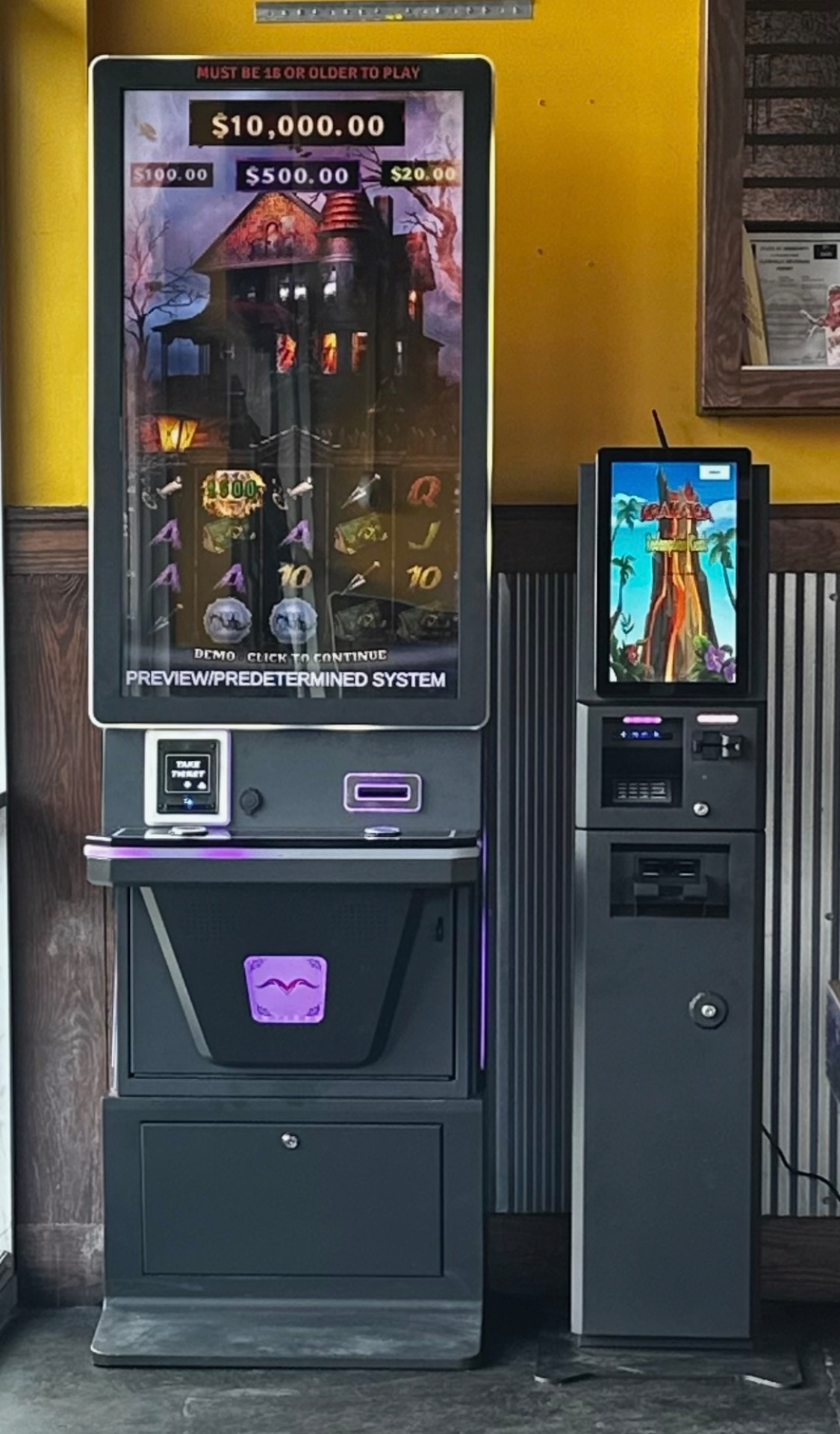
Close-Up View
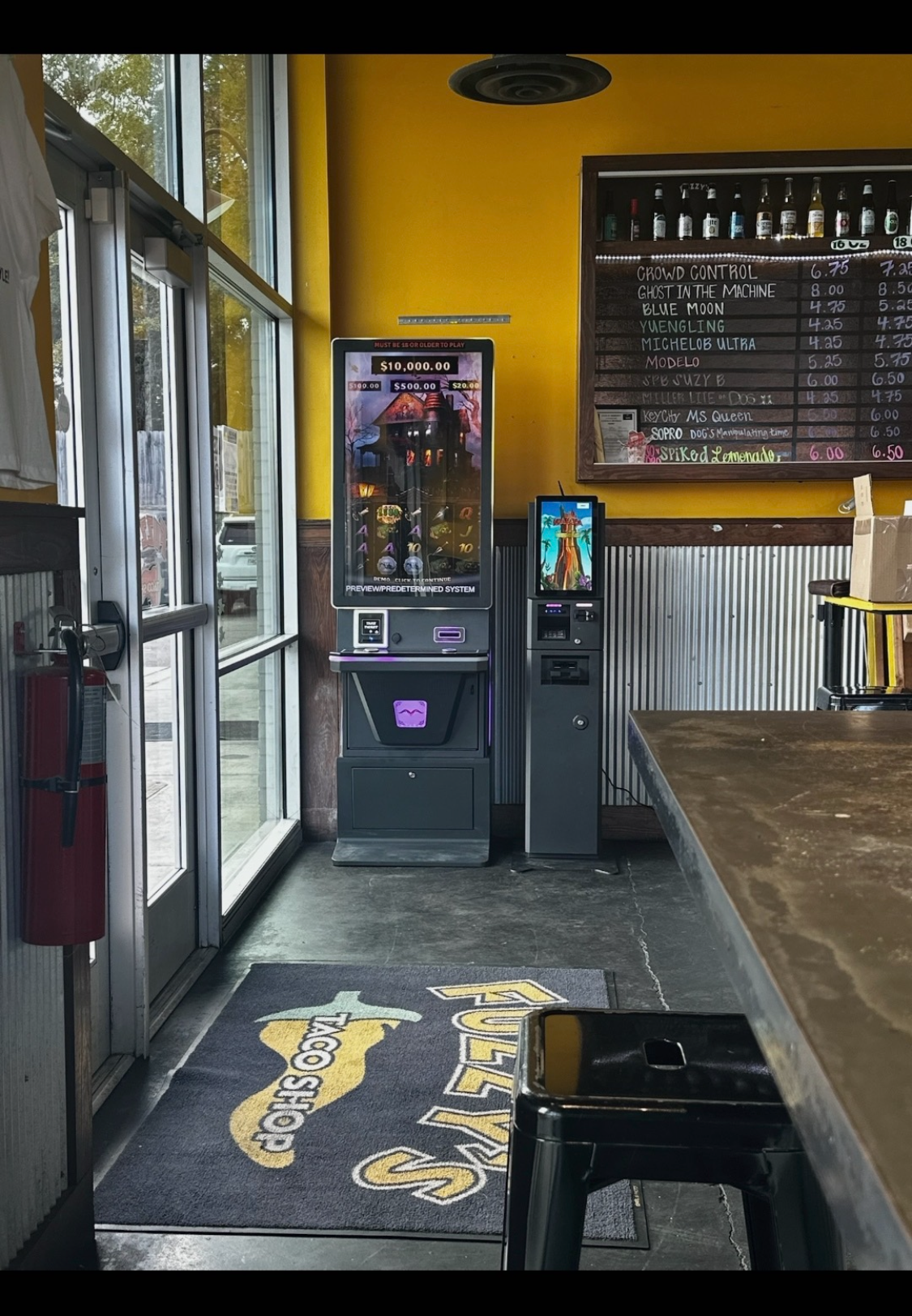
Deployed in a Restaurant
Section 168(k)
Understanding Bonus Depreciation
An accelerated first-year deduction for qualifying business assets placed in service.

Property Type

The property must be tangible personal property depreciated under the Modified Accelerated Cost Recovery System (MACRS) with a recovery period of 20 years or less.

Property Type
For the 100% bonus depreciation, the property must be acquired after January 19, 2025, the date the OBBBA was introduced.

Property Type
Bonus Depreciation Phase-Down & Restoration
Placed in Service Period
Bonus %
After Sept 27, 2017 – Before Jan 1, 2023
100%
After Dec 31, 2022 – Before Jan 1, 2024
100%
After Dec 31, 2023 – Before Jan 1, 2025
100%
After Dec 31, 2024 – Before Jan 1, 2026
100%
Acquired & Placed in Service After Jan 19, 2025
100%(Permanent)
Visual Timeline
Section 168(k)
Arcade Games as Qualified MACRS Property
How coin-operated amusement devices are classified under the IRS depreciation system.

According to IRS guidance, coin-operated amusement devices — including video games and pinball machines — fall under Asset Class 79.0, titled “Recreation”. This asset class has a class life of 10 years and a MACRS recovery period of 7 years under the General Depreciation System (GDS).
Asset Classification
Asset Class
79.0
Description
Recreation
Class Life
10 Years
MACRS Recovery
7 Years (GDS)
ADS Recovery
10 Years
Depreciation Method
200% DB

IRC § 162
The 'Used in a Trade or Business' Requirement
Depreciation deductions, including bonus depreciation, are only permitted for property that is used in a taxpayer’s trade or business or held for the production of income. For an activity to be considered a trade or business, the primary motive must be for income or profit. A sporadic activity or a hobby does not qualify.

Enhancing Customer Experience
In service-based businesses like bowling Alleys, Laundromats, or box chain restaurants, an arcade game in a waiting area can entertain clients, reduce perceived wait times, and improve overall customer satisfaction. This can lead to increased client retention and positive referrals.
Example
Bowling Alleys
Auto repair shops
Box Chain Restaurants
Pool Halls
Boosting Employee Morale
Example
Corporate offices
Call centers
Warehouse facilities
Tech company break rooms

Direct Revenue Generation
Example
Bars & restaurants
Bowling alleys
Dedicated arcades
Entertainment venues

Real-World Deployment
Revenue-Generating Asset in a Restaurant
- Business Use >50%
- Revenue Generating
- Placed in Service
Real-World Deployment
Navigating the 'Listed Property' Rules
01
Heightened Substantiation
The taxpayer must maintain rigorous records to substantiate the business use of the property, as required by IRC § 274(d). This includes:
- Detailed logs of the amount of use
- The specific business purpose for each use
- The date and duration of each use
- Documentation of business vs. personal use hours
02
Greater Than 50%
Business Use
To claim MACRS depreciation (and by extension, bonus depreciation), the qualified business use of the listed property must exceed 50% of its total use during the taxable year.
Business Use Threshold
Practical Example
Interactive Tool
Depreciation Calculator
Enter Your Details
Enter your arcade game purchase details and click Calculate to see your estimated first year depreciation deduction.
IRC § 274(d)
Record-Keeping Checklist
Acquisition Records
Business Use Documentation
Usage Tracking
Revenue & Performance
Tax Filing
Ongoing Compliance
Download the Complete Guide
Hypothetical Income
Arcade Game Revenue Model
Monthly Gross Income
$5,000
Monthly Net Income
$1,147.23
Annual NOI (10 Games)
$137,668
Monthly Revenue Breakdown
Item
%
Monthly
Annual
Gross Income
100%
$5,000.00
$60,000.00
Payout to Customers — Prize payouts and jackpot distributions
30%
($1,500.00)
($18,000.00)
Venue Operator / Host — Revenue share with the hosting location
15%
($525.00)
($6,300.00)
Software / Tech / Maint / Repairs — Licensing, technology fees, and upkeep
30%
($1,050.00)
($12,600.00)
Debt Service — Dealer financing $140K over 180 months @ 0%
Fixed
($777.77)
($9,333.24)
Payout to Customers — Prize payouts and jackpot distributions
($3,852.77)
($46,233.24)
Gross Income
$1,147.23
$13,766.76
Scale to 10 Games
Annual net operating income across your entire fleet
Per Game
$13,766.76
10 Games
$137,668
Financing Assumptions
Financed Amount
Term
Interest Rate
$140,000 per game
180 months (15 years)
0% (dealer financing)
Revenue projections are hypothetical and for illustrative purposes only. Actual income will vary based on location, game type, foot traffic, and market conditions. This is not a guarantee of income.
Monthly Gross Income
$10,000
Monthly Net Income
$3,072.23
Annual NOI (10 Games)
$368,668
Monthly Revenue Breakdown
Item
%
Monthly
Annual
Gross Income
100%
$10,000.00
$120,000.00
Payout to Customers — Prize payouts and jackpot distributions
30%
($3,000.00)
($36,000.00)
Venue Operator / Host — Revenue share with the hosting location
15%
($1,050.00)
($12,600.00)
Software / Tech / Maint / Repairs — Licensing, technology fees, and upkeep
30%
($2,100.00)
($25,200.00)
Debt Service — Dealer financing $140K over 180 months @ 0%
Fixed
($777.77)
($9,333.24)
Total Expenses
($6,927.77)
($83,133.24)
Net Operating Income (per game)
$3,072.23
$36,866.76
Scale to 10 Games
Annual net operating income across your entire fleet
Per Game
$36,866.76
10 Games
$368,668
Financing Assumptions
Financed Amount
Term
Interest Rate
$140,000 per game
180 months (15 years)
0% (dealer financing)
Revenue projections are hypothetical and for illustrative purposes only. Actual income will vary based on location, game type, foot traffic, and market conditions. This is not a guarantee of income.
Investment Analysis
Break-Even Analysis
Total Down Payment
$100,000
Tax Savings (37%)
$370,000
Break-Even (NOI Only)
9 Months
Break-Even (NOI + Tax)
Immediate
Cumulative Cash Flow vs. Down Payment
Component
Amount
Notes
Total Purchase Price
$250,000
10 × $100,000
Down Payment (10%)
($35,000)
Cash out of pocket
Tax Savings (Bonus Depreciation)
+$95,000
100% deduction × 37% rate
Net Position After Tax Benefit
+$0
Net cash positive from Day 1
Monthly NOI (10 games)
$11,472.30
Conservative ($5K/mo)
Break-Even (NOI Only)
0
Without tax benefit
Break-Even (NOI + Tax Savings)
Immediate
Tax savings > down payment
Immediate Break-Even Achieved
The $95,000 in tax savings from 100% bonus depreciation exceeds the $35,000 down payment by $60,000. The taxpayer is cash-positive from Day 1, and all subsequent NOI is pure profit.
Break-even analysis is for illustrative purposes only. Actual results depend on revenue performance, tax filing timing, and individual tax circumstances. Consult a qualified tax professional for personalized
Debt Service
Loan Amortization Schedule
Amortization Schedule
| Month | Payment | Principal | Interest | Balance |
|---|
Showing the first 12 months. The charts below use the full selected loan term.
Monthly Payment Breakdown
Loan Balance Over Time
Side-by-Side
Compare Scenarios
Scenario 1
15 Year TermScenario 2
15 Year TermSide By Side Comparison
Comparison Summary
Scenario comparison will appear here.
Collaborate
Share Your Analysis
Analysis Summary
Configure and share your depreciation analysis
Export as PDF
Download a PDF report of your loan analysis with all selected values.
Email Report
Send your analysis directly to your email or financial advisor.
Copy Link
Create a shareable link to your analysis that others can view online.
Print a hard copy of your analysis for physical records or meetings.
Share
Share your findings with others through supported sharing options.
Download Data
Export raw data as CSV file for further analysis.
Complete Picture
Total Return on Investment
Select Scenario
15-Year Financial Summary
| Year | NOI | Loan Payments | Tax Savings | Net Cash Flow | Cumulative |
|---|
Investment Growth Over Time
Monthly ROI Performance
Future Projections
Real-World Example
$1.5M Scenario
See how purchasing six (6) commercial-grade certified game-of-skill machines can generate a $1.5 million first-year tax deduction while requiring only $210,000 in initial capital.
The Scenario
An individual taxpayer filing Married Filing Jointly (MFJ) earns $1,500,000 of taxable income. The taxpayer operates a legitimate trade or business and acquires six (6) commercial-grade certified game-of-skill machines at $250,000 per machine, for a total purchase price of $1,500,000.
The taxpayer files as Married Filing Jointly (MFJ) with a top marginal federal tax rate of 37%. Under IRC § 168(k), the full purchase
price is eligible for bonus depreciation regardless of how the acquisition is financed.
Before
Taxable Income
$1,500,000
Federal Tax (MFJ)
$479,062
100% Bonus Depreciation
− $1,500,000
10 games × $150K deducted in Year 1
After
Taxable Income
$0
Federal Tax (MFJ)
$0
Detailed Tax Impact
Line Item
Without Arcade
With Arcade
Gross Taxable Income
$1,500,000
$1,500,000
Arcade Games (10 × $150,000)
—
($1,500,000)
Down Payment (10%)
—
$150,000
Dealer Financing (90% at 0%)
—
$1,350,000
Bonus Depreciation (100%) — OBBBA
—
($1,500,000)
Adjusted Taxable Income
$1,500,000
$0
Filing Status
MFJ
MFJ
Federal Tax Owed
$479,062
$0
Federal Tax Savings
Taxable Income
$479,062
Net federal benefit: $329,062
Combined Federal + State Tax Savings
California (13.3%)
State savings: $199,500
New York (10.9%)
State savings: $163,500
Sample State (5%)
State savings: $75,000
$678,562
$642,562
$554,062
$1,500,000
Anybody
319%
ROI on Down Payment
$0
Federal Tax Owed
Roth Conversion Strategy
$1.5M Scenario
The Scenario
An individual taxpayer, married filing jointly, converts $1,000,000 from a Traditional IRA to a Roth IRA in the 2025 tax year. This
conversion is treated as ordinary income, creating a significant tax liability. To offset this, the taxpayer also operates a legitimate trade
or business and purchases 10 commercial-grade arcade games at $100,000 each — a total investment of $1,000,000. The taxpayer
puts down only 10% ($100,000) and finances the remaining 90% ($900,000) at 0% dealer financing. All games are placed in service on
March 1, 2025 — after the OBBBA effective date — qualifying for 100% bonus depreciation on the full $1,000,000.
$0 Tax on Conversion
Tax-Free Roth Conversion
294%
ROI on Down Payment
$194,062
Net Cash Benefit
Why this matters: A Roth conversion moves pre-tax retirement funds into a tax-free growth account. Normally, the conversion triggers
a massive tax bill — in this case, $294,062 on a $1M conversion. By strategically timing the arcade game purchase with 0% dealer
financing, the taxpayer eliminates the entire conversion tax while putting down only $100,000 in cash. The $1M now grows tax-free in
the Roth IRA forever, and the arcade games generate ongoing business value. The taxpayer still owes $900,000 on the financing, but
the $294,062 in tax savings provides substantial cash flow to service that debt.

Summary
When properly structured, certified game-of-skill machines may qualify for 100% Bonus Depreciation under IRC §168(k) when placed into service in a qualifying trade or business.
Because the deduction is based on the full purchase price rather than the initial cash investment, this strategy may provide taxpayers with a powerful tool for offsetting taxable income—including income generated from Roth IRA conversions—while simultaneously acquiring income-producing business assets.
Whether used to entertain customers, boost employee morale, or directly generate revenue, the key is to establish a clear nexus between the arcade game and a legitimate business purpose. By doing so, businesses can leverage this unique asset to significantly reduce their tax liability in the year of purchase.
Frequently Asked Questions
Find answers to the most common questions regarding bonus depreciation, financing, Roth conversions, qualifying business use, compliance requirements, and the acquisition of certified game-of-skill machines.
Will claiming bonus depreciation on an arcade game trigger an audit?
There is no specific audit trigger for claiming bonus depreciation on arcade games. The IRS processes millions of returns with depreciation deductions. However, the deduction must be legitimate and properly documented. What increases audit risk is: (1) claiming personal assets as business property, (2) failing to maintain required records for listed property, (3) inconsistencies between […]
What happens if the game breaks down or needs repairs?
Repair and maintenance costs for a business asset are generally deductible as ordinary business expenses under IRC § 162, separate from the depreciation deduction. If the game requires a major repair or component replacement, the cost may be deductible immediately or may need to be capitalized depending on the nature and amount. A complete breakdown […]
What records do I need to keep?
Because arcade games are ‘listed property’ under IRC § 280F, you must maintain heightened substantiation records under IRC § 274(d). Required documentation includes: (1) date the game was placed in service, (2) purchase price and proof of payment, (3) seller information, (4) written statement of business purpose, (5) physical location of the game, (6) contemporaneous […]
Does the interest rate on financing affect the depreciation deduction?
No. The depreciation deduction is based on the cost basis of the asset, not the financing terms. Whether you get 0% dealer financing or pay 7% interest, the bonus depreciation deduction is the same. However, the interest rate does affect your overall return on investment and cash flow. At 0% dealer financing, your monthly payments […]
Can I claim the full deduction even if I finance the purchase?
Absolutely. This is one of the most powerful aspects of bonus depreciation. You can deduct the full purchase price of the asset in Year 1 regardless of how much you actually paid in cash. If you put 10% down and finance 90%, you still deduct 100% of the cost. For example, purchasing 10 games at […]
Is the 100% bonus depreciation permanent under the OBBBA?
Yes. The One Big Beautiful Bill Act (OBBBA), signed into law in 2025, permanently restored 100% bonus depreciation for qualified property acquired and placed in service after January 19, 2025. This reversed the phase-down that had been in effect: 80% for 2023, 60% for 2024, 40% for January 1–19, 2025, and what would have been […]
Reference
Tax Terms Glossary
One Big Beautiful Bill Act
Federal legislation signed into law in 2025 that, among other provisions, permanently restored 100% bonus depreciation for qualified property placed in service after January 19, 2025. This reversed the phase-down schedule that had reduced bonus depreciation to 40% for 2025.
Relevance to Arcade Games
P.L. 119-XXX
Tax Cuts and Jobs Act
Major tax reform legislation enacted in December 2017 that temporarily increased bonus depreciation to 100% for property placed in service after September 27, 2017, and before January 1, 2023, with a phase-down schedule through 2027. It also expanded bonus depreciation to cover used property for the first time.
Relevance to Arcade Games
P.L. 115-97
Asset Class 79.0
The IRS asset classification for ‘Recreation’ property, which includes coin-operated amusement devices, arcade games, and similar entertainment equipment. This class determines the applicable MACRS recovery period and depreciation method.
Relevance to Arcade Games
Rev. Proc. 87-56
Adjusted Basis
The original cost of an asset adjusted for depreciation deductions taken, improvements made, and other adjustments. When an asset is sold, the difference between the sale price and adjusted basis determines the gain or loss.
Relevance to Arcade Games
IRC § 1016
Roth Conversion
The process of transferring funds from a traditional IRA or 401(k) to a Roth IRA. The converted amount is included in taxable income for the year of conversion, but future qualified withdrawals from the Roth IRA are tax-free.
Relevance to Arcade Games
IRC § 408A
Section 179 Expensing
An election that allows businesses to deduct the full purchase price of qualifying equipment and software in the year it is placed in service, subject to annual dollar limits ($1,250,000 for 2025) and a phase-out threshold. Unlike bonus depreciation, Section 179 cannot create or increase a net operating loss.
Relevance to Arcade Games
IRC § 179
Net Operating Loss
A tax loss that occurs when a taxpayer’s allowable deductions exceed their taxable income in a given year. NOLs can generally be carried forward indefinitely to offset up to 80% of taxable income in future years (with some exceptions).
Relevance to Arcade Games
IRC § 172
Listed Property
A category of depreciable assets that are susceptible to personal use, subject to additional substantiation and record-keeping requirements. If business use falls to 50% or less, the property must be depreciated using the Alternative Depreciation System (ADS) straight-line method.
Relevance to Arcade Games
IRC § 280F(d)(4)
Depreciation Recapture
A tax provision that requires taxpayers to recognize ordinary income when they sell a depreciated asset for more than its adjusted basis, or when business use drops below the required threshold. The recaptured amount is the difference between the depreciation claimed and what would have been allowed.
Relevance to Arcade Games
IRC § 1245 / § 280F(b)(2)
Substantiation Requirements
The documentation and record-keeping obligations that taxpayers must satisfy to claim certain deductions. For listed property, these include contemporaneous records of business use, date placed in service, cost, and business purpose.
Relevance to Arcade Games
IRC § 274(d)
Form 4562
The IRS form used to claim depreciation and amortization deductions, including bonus depreciation and Section 179 expensing. Part V of Form 4562 specifically addresses listed property and requires detailed reporting of business use percentages.
Relevance to Arcade Games
IRS Form 4562
Half-Year Convention
A MACRS convention that treats all property placed in service (or disposed of) during a tax year as placed in service (or disposed of) at the midpoint of that year. This means only half of the first-year depreciation is allowed, regardless of the actual date the asset was placed in service.
Relevance to Arcade Games
IRC § 168(d)(1)
Qualified Property
Property that meets the requirements for bonus depreciation under IRC § 168(k). It must be MACRS property with a recovery period of 20 years or less, and the original use must commence with the taxpayer (or it must meet the used property acquisition requirements added by TCJA).
Relevance to Arcade Games
IRC § 168(k)(2)
Depreciable Basis
The amount of an asset’s cost that can be recovered through depreciation deductions. For business assets, this is typically the purchase price plus sales tax, delivery, and installation costs, multiplied by the business use percentage.
Relevance to Arcade Games
IRC § 167(c)
Alternative Depreciation System
A depreciation method required for certain property that uses straight-line depreciation over a longer recovery period than GDS. ADS is mandatory for listed property when business use is 50% or less, and for property used predominantly outside the United States.
Relevance to Arcade Games
IRC § 168(g)
Recovery Period
The number of years over which the cost of a depreciable asset is recovered through annual depreciation deductions under MACRS. Different asset classes have different recovery periods as specified in IRS Revenue Procedure tables.
Relevance to Arcade Games
IRC § 168(c)
Placed in Service
The date on which a depreciable asset is first available and ready for use in a trade or business or for the production of income. This is not necessarily the purchase date — it is when the asset is set up, installed, and operational.
Relevance to Arcade Games
Treas. Reg. § 1.167(a)-11(e)(1)
Bonus Depreciation
An additional first-year depreciation deduction that allows businesses to immediately deduct a percentage of the cost of qualifying assets in the year they are placed in service, rather than depreciating them over their full recovery period.
Relevance to Arcade Games
IRC § 168(k)
Modified Accelerated Cost Recovery System
The current tax depreciation system in the United States, established by the Tax Reform Act of 1986. MACRS allows businesses to recover the cost of tangible property over a specified recovery period through annual deductions using declining balance methods that switch to straight-line.
Relevance to Arcade Games
IRC § 168
Contact Your CPA
Tips for Your CPA Meeting
Get Started
Book a Discovery Call
Calendly — Michael Johnson
Sources
References